


Cross-Platform App Development Company

Agile Stormers is a cross-platform app development company headquartered in Houston, Texas, serving startups, growing businesses and enterprises across the United States. Our cross-platform mobile app development services build iOS and Android apps from a single shared codebase using proven frameworks, so you reach both audiences faster, keep one team and one roadmap, and avoid paying twice for the same features.

150+

Projects Delivery

130+

Satisfied Clients

95%

On-Time Delivery

    Book a Free
    Consultation

    By submitting this form, you agree to our Privacy Policy

    Cross-Platform App Development for Every Business Stage

    The right cross-platform strategy depends on your stage, your team and how much of your app needs deep device access. We help you decide before you spend, then build to fit.

    Startups: Launch on iOS and Android simultaneously with one team and budget. Cross-platform development helps validate ideas across markets, accelerate time to market, and adapt quickly based on user feedback.

    SMBs & Mid-Market: Build mobile solutions that align with your business goals. Cross-platform development helps you reach customers on both platforms, optimize development budgets, and scale your digital presence as your business grows.

    Enterprise: Modernize and streamline mobile development across business units. Cross-platform solutions enable consistent user experiences, shared architecture, and scalable development while allowing native integrations for complex business requirements.

    Why Businesses Choose Agile Stormers for Cross-Platform Development

    Most agencies push the framework they know best. We work across leading cross-platform frameworks and native stacks, so our advice is driven by your product, not our tooling. That makes the biggest decision on your project, which approach to use, one you can trust.

    80+

    Businesses Facilitated

    50+

    Team of Experts

    7+

    Years of Experience

    Honest Framework Guidance

    We compare cross-platform frameworks and native options against your features, team skills, performance needs, and budget. You get a clear recommendation, including when native iOS or Android is the smarter investment.

    Security & Compliance

    Shared code does not mean shared risk. We use iOS Keychain, Android Keystore, biometric authentication, encrypted storage, certificate pinning, vulnerability scanning, and secure API design. We also plan for HIPAA, PCI DSS, GLBA, SOC 2, and applicable privacy requirements from the first sprint.

    Transparent Delivery & Partnership

    Every two-week sprint produces builds for TestFlight and Google Play internal testing. You own your source code and developer accounts, while we plan framework and OS upgrades to keep your codebase healthy.

    Cross-Platform App Development Services

    01 Number Icon

    Cross-Platform Consulting

    We compare the leading frameworks against your features, team and budget and document the recommendation.

    02 Number Icon

    Cross-Platform Mobile App Development

    One codebase for iOS and Android, built to the design conventions of each platform, with shared business logic and platform-specific behavior where it matters.

    03 Number Icon

    Cross-Platform MVP Development

    A lean, dual-platform MVP with analytics and a scalable architecture, built to validate your idea on both app stores at once.

    04 Number Icon

    Design Systems & Platform-Adaptive UI/UX

    One design language that adapts to iOS and Android conventions, with reusable components, theming and accessibility built in.

    05 Number Icon

    Native Modules & Hardware Integration

    Custom native code for Bluetooth LE, NFC, camera, biometrics, background services and vendor SDKs, so cross-platform apps are never limited by the framework.

    06 Number Icon

    Web & Desktop Extensions

    Extend your mobile codebase to the web and desktop with Flutter or React Native for Web where it makes business sense.

    04 Number Icon

    Migration, Upgrades & Technical Audits

    Move duplicate native apps to a shared codebase, upgrade React Native or Flutter to current versions, fix performance bottlenecks and audit existing cross-platform apps.

    05 Number Icon

    Dedicated Cross-Platform Developers

    Add experienced cross-platform engineers to your team, or hand us the roadmap with a dedicated team in Central Time.

    06 Number Icon

    Native App Development

    For graphics-heavy, AR, or hardware-intensive products, native development may be the better fit. Explore our iOS App Development and Android App Development services

    Case Studies

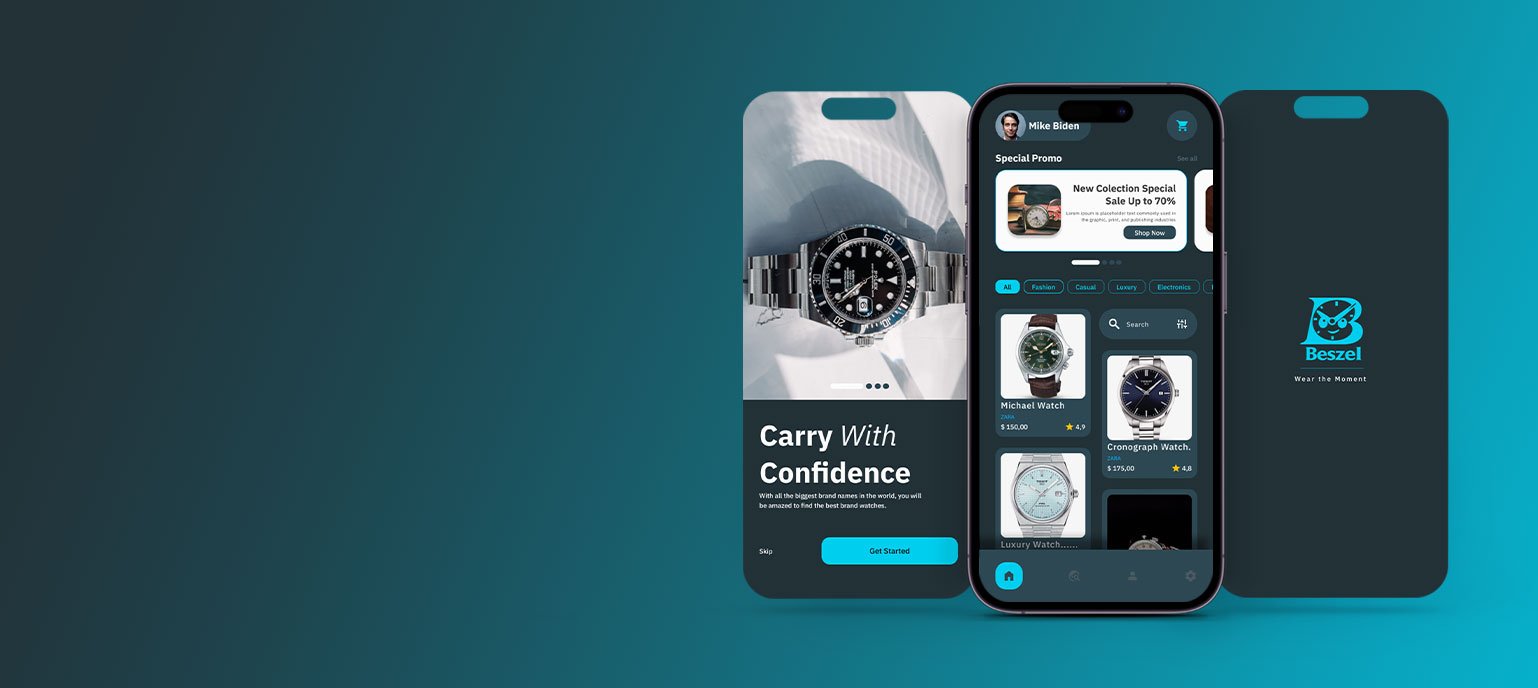
    Explore our case studies to see how we build scalable cross-platform apps that solve business challenges and deliver seamless experiences across iOS and Android.

    Industries We Build Android Apps For

    Cross-platform shines where reaching every user quickly matters more than squeezing out the last bit of native performance.

    Technology Stack We Use

    React

    React Native

    Flutter Logo

    Flutter

    TypeScript Logo

    TypeScript

    node JS Logo

    Node.js

    Python Logo

    Python

    Dotnet Logo

    .NET

    Java Logo

    Java

    GraphQL Logo

    GraphQL

    AWS Logo

    Amazon Web Services (AWS)

    Microsoft Azure Logo
    Microsoft Azure

    Google Cloud Platform Logo

    Google Cloud Platform

    Firebase Logo

    Firebase

    SAP Logo

    SAP

    Oracle Netsuite Logo

    Oracle NetSuite

    Microsoft Dynamics 365 Logo

    Microsoft Dynamics 365

    Salesforce Logo

    Salesforce

    Hubspot Tech Logo

    HubSpot

    Postgresql Logo

    PostgreSQL

    MySQL Logo

    MySQL

    Redis Logo

    Redis

    mongoDB Logo

    MongoDB

    Microsoft SQL Server Logo

    Microsoft SQL Server

    Docker Logo

    Docker

    Kubernetes Logo

    Kubernetes

    Jenkins Logo

    Jenkins

    Github Actions Logo

    GitHub Actions

    Gitlab Logo

    GitLab CI/CD

    Oauth Logo

    OAuth 2.0

    openid connect Logo

    OpenID Connect

    auth0 Logo

    Auth0

    Okta Logo

    Okta

    Keycloak Logo

    Keycloak

    Our End-to-End Mobile App Development Process

    Building a successful mobile app requires more than writing code. It takes careful planning, thoughtful design, secure engineering, and continuous improvement. At Agile Stormers, we follow a structured development process that keeps your project transparent, aligns technology with business goals, and delivers an application ready for real-world use. From initial discovery to post-launch support, we work closely with your team to ensure every stage meets your expectations.

    Discovery & Framework Strategy

    The most expensive cross-platform mistake is picking the wrong framework. We start by understanding your product, team and constraints, then make the technology decision with evidence.

    During this stage, we focus on:

    • Business Requirements: Understand your model, audience, budget, launch date and growth plans.
    • Feature-by-Feature Native Audit: Review each planned feature (camera, Bluetooth, background location, AR, payments, biometrics) to see whether a framework handles it well or needs native code.
    • Framework Decision Matrix: Compare React Native, Flutter, Kotlin Multiplatform and fully native options against performance, developer availability, ecosystem maturity and long-term maintenance.
    • Code-Sharing Strategy: Decide what will be shared (business logic, networking, UI) and what stays platform-specific.
    • Team & Talent Fit: Consider your existing web, React or Kotlin skills and who will maintain the app after launch.
    • Compliance & Security Planning: Identify HIPAA, GLBA, PCI DSS and Texas privacy obligations, plus App Store and Google Play policies.
    • MVP Planning: Prioritize features for a first release that ships on both stores together.

    Deliverable: A documented framework recommendation with reasoning, code-sharing plan, scope, roadmap and estimated timeline.

    UI/UX Design & Prototyping

    A cross-platform app should feel at home on both platforms, not like a compromise on either. We design one system that adapts.

    Our design process includes:

    • User Journey Mapping: Define flows once, then note where iOS and Android expectations differ.
    • Design System & Tokens: Build a shared component library with colors, typography, spacing and states defined as reusable tokens.
    • Platform-Adaptive Patterns: Decide where to use platform-specific behavior, such as navigation, back gestures, dialogs, pickers and haptics.
    • Interactive Prototyping: Provide clickable prototypes tested on both an iPhone and an Android phone.
    • Responsive Layouts: Design for phones, tablets and foldables from a single set of adaptive rules.
    • Accessibility: Support VoiceOver and TalkBack, dynamic text sizes, contrast and touch targets.

    Deliverable: A design system, approved screens and prototypes that define both shared and platform-specific behavior.

    Architecture & Shared Code Foundation

    This stage determines how much of your codebase is truly shared and how easily it can grow.

    This stage covers:

    • Project Structure: Set up a monorepo or modular structure that separates shared code from platform-specific code.
    • State Management & Data Flow: Choose the right approach, such as Redux Toolkit or Zustand for React Native, or Riverpod or Bloc for Flutter.
    • Shared Business Logic: Centralize validation, networking, caching and rules so both platforms behave identically.
    • Native Module Plan: Define which features need Swift or Kotlin modules, and how they connect to the shared layer.
    • API & Integrations: Design REST or GraphQL APIs and connect payments, maps, CRM, ERP and analytics.
    • Authentication & Security: Use Keychain and Keystore secure storage, biometrics, OAuth and SSO, and certificate pinning where appropriate.
    • CI/CD Pipeline: Configure automated builds and tests for both platforms with Fastlane, EAS, Codemagic or GitHub Actions.

    Deliverable: Architecture documentation, a native-module plan and a working dual-platform project skeleton with CI.

    Agile Development

    We build in two-week sprints and ship to both platforms every time, so feature parity is never a surprise at the end.

    Our development activities include:

    • Shared Feature Development: Build screens and logic once in React Native with TypeScript or in Flutter with Dart.
    • Native Module Development: Write Swift and Kotlin code where a feature needs deep platform access.
    • Backend Development: Build the APIs, databases and server-side logic your app depends on.
    • Platform Features: Add push notifications, deep links, biometrics, payments, maps and offline sync on both platforms.
    • Feature Parity Checks: Verify each sprint’s work behaves correctly on iOS and Android before moving on.
    • Sprint Reviews: Demo working builds on real devices from both platforms.
    • Continuous Distribution: Share TestFlight and Google Play internal-testing builds each sprint, plus preview builds for quick feedback.

    Sprints are typically two weeks, adjusted to project complexity.

    Deliverable: Working iOS and Android builds from one codebase, sprint updates and documented progress.

    Quality Assurance & Testing

    Cross-platform QA has to prove the app works well on both platforms, not just that the shared code is correct.

    Our testing process includes:

    • Functional Testing: Verify features, flows and edge cases on both platforms.
    • Dual-Platform Device Matrix: Test on a range of iPhones and Android phones, including older and low-end models where cross-platform performance is most visible.
    • Automated End-to-End Testing: Use Detox, Maestro, Appium or Flutter integration tests to run the same flows on both platforms.
    • Unit & Component Testing: Use Jest, Flutter tests and Storybook-style component checks for shared logic and UI.
    • Platform-Specific Checks: Review native modules, permissions, keyboard behavior, back navigation and OS-specific edge cases.
    • Performance Testing: Profile startup time, animation smoothness, memory and bundle size on both platforms.
    • Security Testing: Assess storage, API security, permissions and dependency vulnerabilities.
    • User Acceptance Testing (UAT): Let stakeholders review the real app through TestFlight and Google Play testing tracks.

    Issues are documented, prioritized and resolved before release.

    Deliverable: A tested dual-platform app, QA results for both platforms and release readiness confirmation.

    Google Play Launch & Distribution

    One of cross-platform’s biggest advantages is launching everywhere at once. We manage both store processes in parallel.

    Launch activities include:

    • Release Preparation: Configure production builds, signing, provisioning and versioning for both platforms.
    • Store Listings: Prepare descriptions, screenshots, icons and metadata for the App Store and Google Play.
    • Privacy & Policy Disclosures: Complete Apple privacy labels and Google Play Data safety forms, and meet each store’s review guidelines.
    • Submission & Review: Submit to both stores and respond to review feedback.
    • Staged Rollout: Release gradually and watch crash rates before expanding.
    • Over-the-Air Updates: Where suitable and within store policies, set up OTA updates for non-native changes to speed up fixes.
    • Private Distribution: Support enterprise distribution through MDM, Apple Business Manager and managed Google Play.

    Deliverable: A live iOS and Android app, or a managed private deployment, with rollout monitoring in place.

    Post-Launch Support, Maintenance & Optimization

    Cross-platform apps depend on a framework that evolves, plus two operating systems. Planned maintenance keeps the codebase healthy and avoids painful catch-up upgrades.

    Our post-launch services include:

    • Crash & Performance Monitoring: Track stability and speed on both platforms with Firebase Crashlytics and store analytics.
    • Framework Upgrades: Keep React Native or Flutter and their dependencies current, including major architecture upgrades.
    • OS & Store Policy Updates: Update for new iOS and Android releases and changes to App Store and Google Play requirements.
    • Dependency & Security Maintenance: Audit packages, patch vulnerabilities and retire unmaintained libraries.
    • Analytics & Experiments: Measure retention and conversions and run A/B tests.
    • Feature Enhancements: Add new features once and ship them to both platforms together.
    • Selective Native Optimization: Move performance-critical parts to native code if the product outgrows the shared approach.

    Deliverable: Ongoing maintenance, framework and OS upgrades, performance improvements and a roadmap for future releases.

    Ready to Build Your Cross-Platform Mobile App?

    Tell us about your product and we’ll recommend React Native, Flutter, Kotlin Multiplatform or native, with the reasoning, timeline and budget range. No agency runaround.

    Agile Stormers Icon White

    Frequently Asked Questions

    How much does cross-platform app development cost?

    A simple cross-platform MVP typically costs $10,000 to $70,000, a mid-complexity app $70,000 to $170,000, and a complex enterprise app $170,000 or more. Because iOS and Android share most of the code, total cost is often lower than building two separate native apps, though the saving depends on how much native-specific work your features require.

    A cross-platform MVP usually takes 2 to 4 months, a mid-complexity app 4 to 8 months, and an enterprise app 8 to 14 months. Shared code often shortens the path to launching on both stores, and we confirm timelines after a discovery workshop.

    Neither is better in every case. Cross-platform is usually the better choice when you need both iOS and Android quickly, have a limited budget or want one team and one roadmap. Native is usually better for graphics-intensive, AR-heavy or deeply hardware-dependent apps. We recommend the best fit in discovery, and you can read more about native iOS and native Android development.

    The best framework depends on your team, features and timeline. React Native suits teams with React or JavaScript skills, Flutter suits teams that want highly consistent custom interfaces, and Kotlin Multiplatform suits teams with Kotlin expertise that want to share business logic. We compare them in discovery, and dedicated React Native and Flutter pages are coming soon.

    Hybrid apps traditionally wrap a web view inside a native shell, while modern cross-platform frameworks such as React Native and Flutter render native components or their own high-performance engine. Today most businesses asking for “hybrid” are best served by a modern cross-platform framework.

    Both are open-source frameworks backed by large companies and active communities, which lowers long-term risk. We reduce it further with clean architecture, planned upgrades and the option to move specific features to native code.

    Compare seven things: whether they build in more than one framework and will recommend native when it fits, live apps on both stores, how they handle native modules, security and compliance experience, honest scoping, ownership of code and accounts, and post-launch upgrade support.

    Yes. We provide bug fixes, framework and OS upgrades, security patches, monitoring and new features under ongoing support plans.